E Commerce
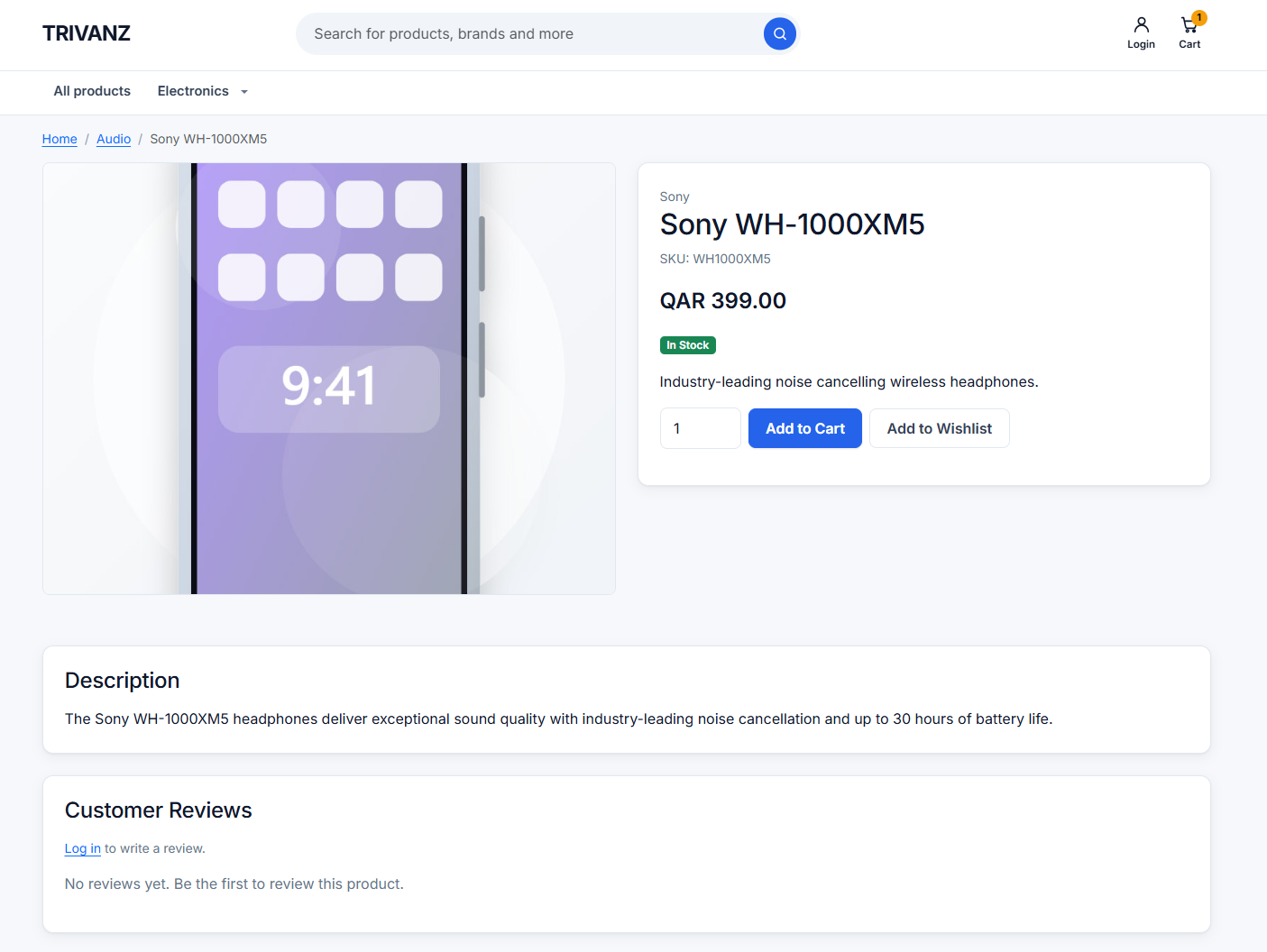
 Before
After
Full description
Type: Commercial-grade e-commerce web application (storefront + admin portal)
Stack: ASP.NET Core MVC (C#), Entity Framework Core, SQL Server, ASP.NET Core Identity, Bootstrap 5, vanilla JS/AJAX, Chart.js
Architecture: Clean/layered architecture — Domain → Application → Infrastructure → Web, with Repository/Service pattern, dependency injection, and async/await throughout
Scale tested: 12,000 products / 3,000 orders under load, with two real scalability bugs found and fixed as a result
What it does
A fully database-driven online store — nothing about products, pricing, images, pages, or settings is hard-coded. Every one of those is managed from the admin portal and stored in SQL Server, so the same codebase can run a completely different store without a code change.
Customer storefront
Modern, responsive design (desktop/tablet/mobile) with a sticky header, live search suggestions, category mega-menus, hero carousel, promotional banners, and an announcement bar
Full catalog browsing: unlimited category depth, brands, filtering (price, brand, attributes, rating, availability), sorting, pagination
Product pages with image galleries, variants (e.g. size × color), stock status, reviews and ratings, and related products
Cart, wishlist, and a multi-step checkout with coupon codes, shipping method selection, and tax calculation — all totals recalculated server-side, never trusted from the client
Payments: Stripe (card) and Cash on Delivery. Orders are only ever marked paid by a verified, idempotent Stripe webhook — never by a browser redirect
Customer account area: order history, addresses, reviews, wishlist, GDPR-compliant data export and account deletion requests
CMS pages, FAQ, blog, contact form, and newsletter signup
SEO: per-page meta tags, canonical URLs, sitemap, Google Analytics and Search Console integration — all configured from the admin, no hard-coded tracking IDs
Admin portal
Role-based access control with a granular permission system (75+ permission codes across every module) — SuperAdmin, Admin, Staff, and fully custom roles, each configurable down to individual View/Create/Edit/Delete actions per feature
Customizable dashboard — the SuperAdmin can add, edit, reorder, and role-restrict widgets (stat cards, charts, tables, alerts, quick links) from 30+ live data sources, with no code changes required
Media library — every image on the site (products, categories, banners, blog, pages, logo, favicon) is uploaded and managed centrally, with usage tracking so an image in use can't be accidentally deleted
Theme engine — brand colors, corner radius, and announcement bar are editable from Settings and apply to the storefront instantly
Full catalog management: products, variants, attributes, categories, brands, inventory tracking with transaction history
Order management: order lifecycle, refunds, inventory adjustments
Marketing: promotions, coupons, banners, homepage section management
Content management: CMS pages, blog, FAQ, testimonials, contact inquiries — each with its own role permissions
Reporting: sales, inventory, and customer reports
Operational tools: global admin search, bulk operations, CSV import/export for products and customers, audit logging on every sensitive action
Settings: company info, currency, payment gateways, SMTP/email, analytics, social media, maintenance mode — every configuration surface an admin needs, none of it in source code
Engineering practices demonstrated
Clean separation of concerns across four layers with one-way dependency flow and interfaces owned by the Application layer
Server-side validation on every form (FluentValidation), with soft-delete for products/customers/categories/brands and immutable point-in-time snapshots on historical orders
Explicit, non-automatic database migrations (never auto-migrate in production) with a separate CLI-driven seed process for starter content
Idempotent payment webhook handling and overselling prevention under concurrent load
GDPR-compliant account deletion/export workflows
Automated test suite (33 tests) covering permissions, validation, seed data integrity, and payment idempotency
Full production deployment documentation: environment variable vs. database-setting boundaries, reverse proxy/TLS/HSTS configuration, backup strategy, and a migration/seeding runbook
Technologies & tools
ASP.NET Core MVC (C#)
Entity Framework Core
SQL Server
ASP.NET Core Identity
Bootstrap 5
vanilla JS/AJAX
Chart.js


Want results like this?
Tell us about your project and we'll put together a formal quotation.